
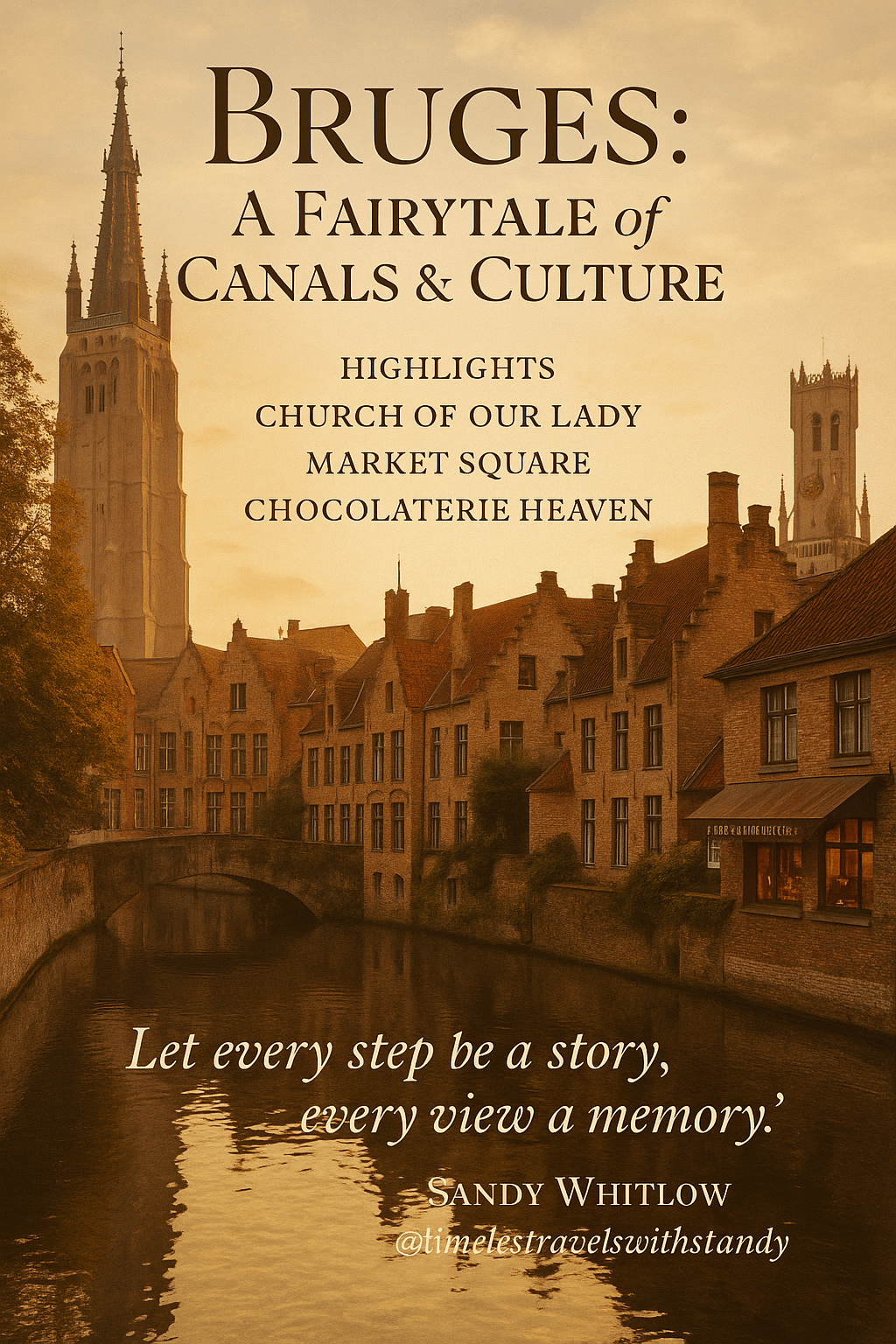
By Sandy Whitlow | Timeless Travels with Sandy
🕯️ Discovering the Enchantment of Bruges: Journey to Remember
There are places that feel like stories waiting to be told, and then there is Bruges—a city that feels as though you’ve stepped right into the pages of a medieval fairy tale. With its winding canals, cobbled lanes, and timeworn spires, Bruges, Belgium—often called the “Venice of the North”—swept us into a world of charm and wonder the moment we arrived.
I had long dreamed of exploring this iconic Flemish city, but nothing prepared me for the depth of feeling we would carry home in our hearts. Bruges didn’t just delight us—it moved us. And one extraordinary moment, in a hushed Gothic church, would remain with us forever.
🍫 Sweet Delights and Chocolate Dreams
Our Bruges adventure began, naturally, with chocolate. It’s impossible to stroll more than a few steps through this UNESCO-listed city without the heavenly scent of cocoa catching your attention. We were like kids in a candy shop—literally—dipping into boutique after boutique, each more enticing than the last.
We sampled pralines that melted like silk on the tongue, dark chocolate truffles dusted in cocoa powder, and artisanal creations infused with everything from raspberry to rose. Every treat was a love letter to craftsmanship. Bruges’ chocolatiers don’t just make sweets—they make art.
🏰 Timeless Beauty in Stone
Beyond the allure of its sweets, Bruges dazzled us with its architecture. Walking hand-in-hand through its medieval streets, we were surrounded by lace-like gables, hidden courtyards, and Gothic towers. The Markt, Bruges’ bustling central square, pulsed with life. Tourists snapped photos from horse-drawn carriages, while the Belfry of Bruges stood watch above the city, as it has since the 13th century.
There’s something magical about wandering a city where every corner whispers a piece of the past. Bruges has mastered the delicate dance between honoring history and embracing the present.
🕍 The Church of Our Lady: A Sacred Story in Stone
Long before it became the home of Michelangelo’s Madonna of Bruges, the Church of Our Lady (Onze-Lieve-Vrouwekerk) stood as a symbol of spiritual devotion and architectural brilliance in medieval Flanders. Rising more than 379 feet (115.5 meters) into the Bruges skyline, its tower remains the tallest structure in the city and one of the tallest brick towers in the world.
Construction of the church began in the 13th century and continued well into the 15th century, resulting in a blend of Romanesque beginnings and soaring Gothic design. Every arch, chapel, and vaulted ceiling was crafted not only as an act of architectural mastery but as a deeply spiritual endeavor—meant to reflect divine beauty here on Earth.
The church’s interior is serene and reverent, filled with centuries of devotion. Among its treasures are ornate altarpieces, baroque woodwork, and elaborate tombs—including the marble effigies of Charles the Bold, last Valois Duke of Burgundy, and his daughter Mary of Burgundy. Their final resting place, beneath the dim glow of flickering candles, is a hauntingly beautiful glimpse into Europe’s noble past.
But of course, it is the Madonna and Child that has made this sacred space a destination for pilgrims and art lovers alike. As the only sculpture by Michelangelo to leave Italy during his lifetime, the Madonna of Bruges is both a rare masterpiece and a cherished symbol of the church’s spiritual and cultural significance.
Even through centuries of war, religious reformations, and shifting tides of power, the Church of Our Lady has stood as a sanctuary of peace and endurance. Today, it remains one of the most visited and beloved landmarks in Bruges—where stone and spirit still echo with stories of faith, artistry, and resilience.
⛪ The Sacred Encounter: The Madonna of Bruges
The soul of our journey revealed itself within the quiet walls of The Church of Our Lady. This magnificent 13th-century structure where the divine seems to linger.
Inside, the air was cool and still. Light streamed in through stained glass, casting soft rainbows across ancient stone. And then, we turned a quiet corner—and gasped.
There she stood.
The Madonna of Bruges—an ethereal marble sculpture by Michelangelo—seemed to glow with inner light. She was delicate yet strong, serene yet profoundly moving. To witness such a masterpiece, in such a sacred space, was more than just a moment of sightseeing. It was transcendence.
I couldn’t hold back the tears as I stood before her, overwhelmed by beauty, grace, and the centuries of reverence that had passed through this chapel. Art has the power to move the soul—and in that moment, it moved mine.
What makes this encounter even more profound is knowing how close the world came to losing her forever. During World War II, the Madonna of Bruges was stolen by the Nazis—a fate that befell many of Europe’s most priceless treasures. Hidden in a salt mine in Altaussee, Austria, her fate hung in the balance.
It was thanks to the bravery and determination of a group of art historians and soldiers known as The Monuments Men that she was found and rescued in 1945. These courageous men risked their lives to protect the world’s cultural heritage, and because of them, we still have the rare and humbling opportunity to stand before this masterpiece today, along with so many others they bravely recovered.
As I gazed at her soft expression and marble folds, I felt immense gratitude—not just for the art, but for those who fought to preserve it. The Madonna of Bruges is more than a sculpture; she is a symbol of what we hold sacred and a reminder that even in the darkest of times, beauty and humanity are worth saving.
🏨 Where We Stayed: Hotel De Castillion
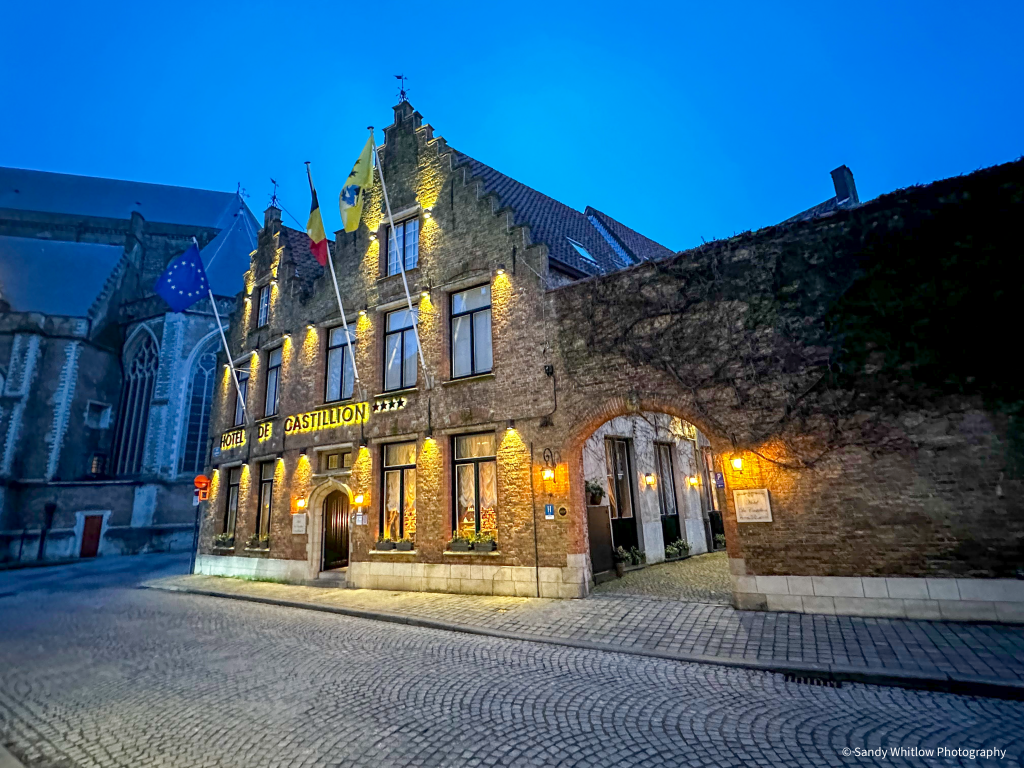
Our home base during our stay was the Hotel De Castillion, a hidden gem nestled in the heart of Bruges. A former bishop’s palace turned boutique hotel, it offered an elegant blend of antiquity and comfort. From its velvet-draped windows to its candlelit courtyard, every corner whispered romance.
This hotel didn’t just provide a place to sleep—it enriched our experience, adding layers of warmth, luxury, and authentic Belgian hospitality to our journey.
✨ Final Reflections
Bruges gave us more than memories—it gave us moments of joy, of awe, of spiritual connection. We left with hearts full and eyes still wide from wonder. Whether you’re drawn to the indulgence of its chocolate, the serenity of its canals, or the majesty of its cathedrals, Bruges delivers the kind of magic that lingers long after you leave.
It is a city where beauty isn’t just seen—it’s felt.
🧳 Travel Tips for Visiting Bruges
1. Best Time to Visit
The best times to experience Bruges are spring (April–June) and fall (September–October) when the weather is mild and the crowds are lighter. December is also enchanting, with Bruges transforming into a winter wonderland during the Christmas Market season, complete with lights, mulled wine, and festive charm.
2. Getting There
- By Train: Bruges is a 1-hour train ride from Brussels. Trains run frequently and arrive at Bruges Station, about a 20-minute walk from the city center.
- By Car: Bruges is easily accessible via Belgium’s motorway system, but parking in the old town is limited—best to park outside and stroll in.
- By Air: Fly into Brussels Airport (BRU), then take a direct train to Bruges.
3. Where to Stay & Eat
- Stay:
- Hotel De Castillion: Elegant, central, romantic—a timeless stay.
- Hotel Dukes’ Palace: For those who want to sleep in an actual 15th-century palace.
- B&B Bariseele: Quaint and personal with canal views.
- Eat:
- Chez Albert: The best fresh Belgian waffles topped with chocolate and strawberries.
- De Stove: Intimate and cozy with a menu of local, seasonal fare.
- Bistro Bruut: Michelin-recommended modern Belgian cuisine in a magical riverside setting.


Don’t be shy–say hi in the comments