
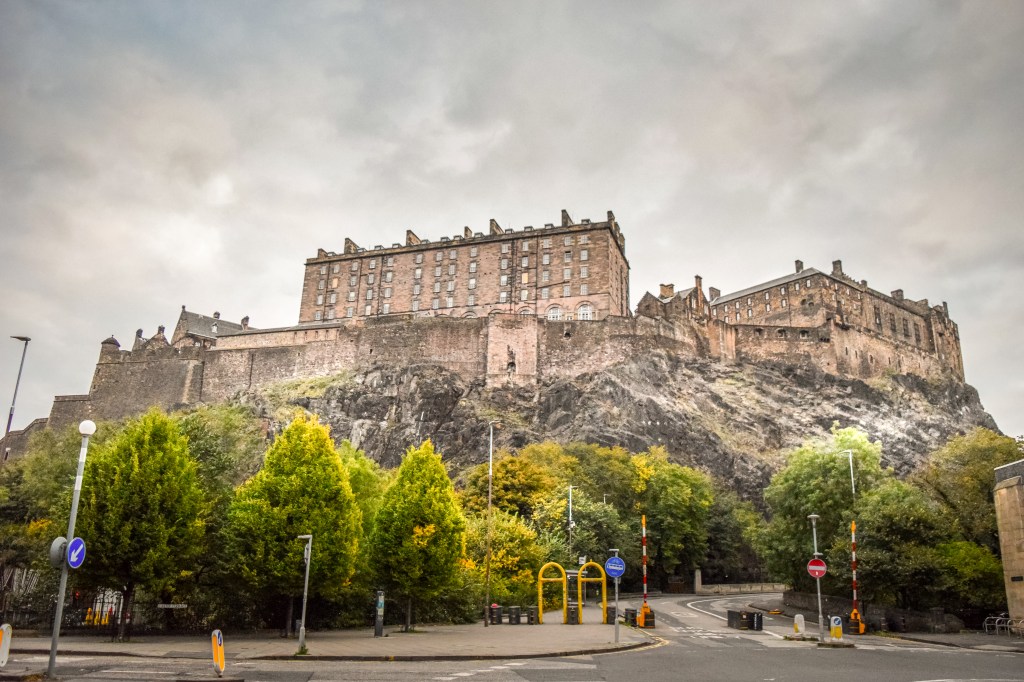
Spotlight Destination: Edinburgh, Scotland
Where stone remembers, and history breathes
Edinburgh isn’t just a city you visit—it’s a place you truly feel. Built on ancient volcanic rock and layered with centuries of triumph, rebellion, faith, and folklore, Scotland’s capital feels alive beneath your feet.
Cobblestone streets wind past medieval closes (alleyways), towering castles, and quiet kirkyards where names and stories linger long after the last bell tolls.
This is a city where history and modern life coexist—and where travelers often feel unexpectedly touched.
🏰 Why Edinburgh Matters
- One of Europe’s most historically intact capitals
- A UNESCO World Heritage Site (Old Town & New Town)
- Center of Scottish political, literary, and cultural identity
- A city shaped by kings, queens, philosophers, poets, and revolutionaries
Edinburgh doesn’t rush. It encourages you to slow down, observe more closely, and listen carefully.
🧳 Perfect location to travel to for…
- History lovers
- Literary travelers
- Ancestral explorers
- Couples seeking atmosphere over itinerary overload
- Travelers who want depth, not rush
🧭 Suggested Pace for Several Days
- Day 1: Castle, Royal Mile, Old Town
- Day 2: Holyrood, Arthur’s Seat, Calton Hill
- Day 3: Museums, New Town, Dean Village
- Day 4 (optional): Literary sites, kirkyards, hidden closes
🍂 Best Time to Visit
- May–June: Long daylight hours, fewer crowds
- September–October: Golden light, autumn color, calmer pace
(August is vibrant—but busy—due to festivals.)
🌿 Must-See & Must-Feel Places
Edinburgh: the deeper walk.
🏰 Edinburgh Castle
History:
Perched atop Castle Rock, an extinct volcanic plug, Edinburgh Castle has served as a royal stronghold since at least the 12th century.
It has been a residence for Scottish kings and queens, a military fortress, and a symbol of national power.
The Honours of Scotland (the Scottish Crown Jewels) are housed here, along with the Stone of Destiny—used in coronations for centuries.
Why it matters:
This is Scotland’s most contested site, besieged more than any other place in Britain.
While visiting the castle:
⛪ Queen Margaret’s Chapel
History & Legacy
Tucked quietly within the walls of Edinburgh Castle, Queen Margaret’s Chapel is the oldest surviving building in the city, dating to the early 12th century.
Built by King David I in memory of his mother, Queen Margaret of Scotland, the small Romanesque chapel stands in stark contrast to the fortress that grew around it over centuries.
Queen Margaret was born around 1045 and became Queen of Scotland through her marriage to King Malcolm III.
Known for her deep piety, learning, and compassion, she played a significant role in shaping Scotland’s religious and cultural life.
Margaret worked to reform the Scottish church, aligning its practices more closely with those of continental Europe, and she was devoted to caring for the poor, founding churches, and supporting education.
Unlike many royal figures remembered for conquest or power, Margaret’s legacy is one of service and moral leadership.
Her personal influence helped transform court life, promoting literacy, charity, and spiritual reflection at a time when Scotland was emerging onto the wider European stage.
Margaret died in 1093, just days after her husband and eldest son. She was canonized in 1250 and remains one of Scotland’s most revered historical figures.
Why it matters:
Amid the military grandeur of Edinburgh Castle, Queen Margaret’s Chapel offers a moment of stillness—a reminder that Scotland’s history was shaped not only by battles and kings, but also by quiet devotion, intellect, and compassion.
🛤️ The Royal Mile
History:
Stretching from Edinburgh Castle to the Palace of Holyroodhouse, the Royal Mile follows a medieval route connecting royal power (the castle) to the monarch’s official residence.
The narrow closes branching off the Mile once housed merchants, tradespeople, and entire families stacked floor upon floor.
Why it matters:
This was the heartbeat of medieval Edinburgh—where commerce, crime, politics, and daily life all converged.
🏛️ Palace of Holyroodhouse
History:
Founded as an abbey in 1128 and later expanded into a palace, Holyroodhouse became the principal residence of Scottish monarchs.
It is most famously associated with Mary, Queen of Scots, whose turbulent reign and tragic fate still echo through its chambers.
Why it matters:
This is where royal history becomes deeply human—betrayal, power struggles, and survival.
🌿 Arthur’s Seat & Holyrood Park
History:
Arthur’s Seat is an ancient volcanic hill rising above the city.
While its name is linked to legends of King Arthur, archaeologists believe the area was used for ritual or defensive purposes long before recorded history.
Why it matters:
From its summit, you can see how geography shaped Edinburgh’s destiny—defense, trade routes, and settlement patterns all become clear.
⛪ St Giles’ Cathedral (High Kirk of Edinburgh)
History:
Founded in the late 12th century, St Giles’ became a focal point of the Scottish Reformation.
John Knox, leader of the Protestant movement in Scotland, preached here during the 16th century.
Why it matters:
Religion and politics collided here, reshaping Scotland’s identity and breaking ties with Catholic Rome.
🪦 Greyfriars Kirkyard
History:
Established in the 16th century, Greyfriars is tied to the National Covenant of 1638, a document signed by thousands who opposed the king’s interference in church matters.
It is also the site of grim Covenanter imprisonments.
Why it matters:
This kirkyard reflects Scotland’s fierce resistance to imposed authority—faith was worth dying for.
🧠 The Writers’ Museum
History:
Dedicated to Robert Burns, Sir Walter Scott, and Robert Louis Stevenson, this museum celebrates Edinburgh’s role as a literary capital during the Enlightenment and beyond.
Why it matters:
Edinburgh was the first UNESCO City of Literature—ideas mattered here as much as armies.
🏙️ The Real Mary King’s Close
History:
Once an active street, Mary King’s Close was partially buried when the Royal Exchange was built above it in the 18th century.
Preserved beneath the city, it offers a rare glimpse into life before modern sanitation and planning.
Why it matters:
This is social history at ground level—how ordinary people lived, worked, and endured.
🌉 North Bridge & South Bridge
History:
Constructed in the late 18th century, these bridges connected the Old Town to the New Town, symbolizing Edinburgh’s expansion during the Enlightenment era.
Why it matters:
They represent a shift from medieval congestion to rational urban planning.
🏛️ New Town (Georgian Edinburgh)
History:
Built between the mid-18th and early 19th centuries, the New Town reflected Enlightenment ideals—symmetry, order, and reason. It was designed to relieve overcrowding in the Old Town.
Why it matters:
This is Enlightenment philosophy expressed in stone.
🖼️ National Museum of Scotland
History:
Opened in 1866 and expanded over time, the museum traces Scotland’s story from prehistoric times through industrialization and global influence.
Why it matters:
If you want context—this is where Scotland explains itself.
🌊 Dean Village
History:
Once a thriving milling community along the Water of Leith, Dean Village operated for centuries outside the city walls.
Its mills powered Edinburgh’s grain production well into the Industrial Age.
Why it matters:
This shows the quieter, working-class side of Edinburgh’s past.
🌙 Calton Hill
History:
Home to unfinished monuments inspired by ancient Greece, Calton Hill reflects Scotland’s admiration for classical learning during the Enlightenment.
Why it matters:
Edinburgh once called itself the “Athens of the North”—this is why.
🎭 Festivals & Cultural Events: When Edinburgh Comes Alive
Edinburgh is often called the festival capital of the world, hosting internationally renowned events throughout the year.
Choosing your travel dates around a festival can dramatically shape your experience—from lively and electric to intimate and reflective.
🌸 Spring (April–May): Renewal & Tradition
- Edinburgh International Science Festival (April)
Founded in 1989, this festival celebrates innovation, discovery, and Scotland’s long-standing intellectual tradition. Events take place across the city, blending history with modern science. - Beltane Fire Festival (April 30)
Inspired by ancient Celtic fire festivals marking the beginning of summer, Beltane is held on Calton Hill and features ritual performances, drumming, fire, and symbolic storytelling. While modern in its organization, it draws deeply from pre-Christian seasonal traditions.
Travel note: Spring offers lighter crowds and a sense of cultural authenticity.
☀️ Summer (June–August): Global Spotlight
- Edinburgh International Festival (August)
Launched in 1947 as a post-war celebration of culture and unity, this festival showcases world-class music, theater, opera, and dance. - Edinburgh Festival Fringe (August)
The largest arts festival in the world, the Fringe began organically when performers showed up uninvited in 1947. Today, it transforms the entire city into a stage, with thousands of performances in venues large and small. - Royal Edinburgh Military Tattoo (August)
Held on the esplanade of Edinburgh Castle, this event features military bands, ceremonial displays, and international performers. It has become one of Scotland’s most iconic spectacles since its first performance in 1950.
Travel note: August is exhilarating but busy—ideal for travelers who thrive on energy and cultural immersion.
🍂 Autumn (September–October): Reflection & Storytelling
- Edinburgh International Book Festival (August–September)
Celebrating Scotland’s literary heritage, this festival brings together authors, poets, historians, and thinkers from around the world in an intimate, conversational setting. - Scottish International Storytelling Festival (October)
Rooted in oral tradition, this festival honors myths, legends, and folk tales—many of which have been passed down for centuries.
Travel note: Autumn offers a quieter, more contemplative experience with rich cultural depth.
❄️ Winter (November–January): Light in the Darkness
- Edinburgh’s Christmas & Hogmanay (December–January)
Hogmanay, Scotland’s New Year celebration, dates back centuries and emphasizes community, renewal, and symbolic rites such as first-footing. Modern celebrations include street parties, torchlight processions, and fireworks.
Travel note: Winter is atmospheric and romantic, though daylight is shorter and the weather is unpredictable.
✨ How to Choose Your Festival Experience
- For culture lovers: August festivals
- For history & tradition: Spring or autumn events
- For magic & atmosphere: Winter celebrations
- For quieter exploration: Late May or September
✨ Sandy’s Travel Insight
Edinburgh is a destination I always recommend as a beginning, not just a stop. From here, Scotland unfolds naturally—north into the Highlands, west toward the Isles, and inward into stories that feel personal, even if it’s your first visit.
📍 Thinking About Visiting?
If Edinburgh is calling to you, I’d love to help you plan a journey that feels meaningful, unrushed, and uniquely yours.
Let’s plan it together.
EXTRAS
🔥 Women of Flame & Stone: Edinburgh’s Heroines
Queen Margaret of Scotland (c.1045–1093)
A queen remembered not for conquest, but for compassion. Margaret reshaped Scotland’s religious life through education, reform, and charity. Her quiet influence endures in Edinburgh’s oldest building—Queen Margaret’s Chapel.
Mary, Queen of Scots (1542–1587)
Crowned as an infant and entangled in political intrigue from an early age, Mary’s connection to Edinburgh is deeply human and tragic. Her time at Holyroodhouse reflects the peril faced by women wielding power in a male-dominated world.
Agnes Sampson (d. 1591)
A respected healer and midwife from the Edinburgh area, Agnes became one of the most infamous victims of Scotland’s witch trials. Her interrogation and execution reveal how fear and politics targeted knowledgeable women.
Flora Stevenson (1839–1905)
An education reformer and social activist, Stevenson helped shape modern schooling in Edinburgh. Her work reminds us that lasting change often comes not through power, but persistence.
Muriel Spark (1918–2006)
One of Scotland’s most celebrated writers, Spark’s sharp wit and psychological insight were shaped by Edinburgh’s intellectual atmosphere. Her legacy continues to define the city’s literary voice.
🛡️ Men of Legacy & Stone: Edinburgh’s Influential Figures
King David I of Scotland (1084–1153)
Son of Queen Margaret and King Malcolm III, King David I shaped medieval Edinburgh through faith, governance, and learning. He founded Holyrood Abbey and expanded Edinburgh’s role as a royal and religious center. His reign helped modernize Scotland’s legal and ecclesiastical systems, leaving a lasting structural legacy.
John Knox (c.1514–1572)
A central figure in the Scottish Reformation, Knox preached at St Giles’ Cathedral and challenged both royal and religious authority. His influence helped establish Presbyterianism in Scotland, reshaping the nation’s spiritual and political identity in ways still felt today.
Adam Smith (1723–1790)
A leading thinker of the Scottish Enlightenment, Smith lived and worked in Edinburgh during a period of extraordinary intellectual activity. His seminal work, The Wealth of Nations, laid the foundations of modern economics and reflected the city’s commitment to reason, inquiry, and debate.
James Hutton (1726–1797)
Often called the “Father of Modern Geology,” Hutton developed revolutionary ideas about deep time while living in Edinburgh. His observations challenged traditional views of Earth’s age and contributed to scientific thought worldwide.
Sir Walter Scott (1771–1832)
One of Scotland’s greatest literary figures, Scott’s historical novels romanticized Scotland’s past and influenced global perceptions of Scottish culture. His work helped revive interest in Highland traditions, and his legacy dominates Edinburgh’s skyline through the towering Scott Monument.
Robert Louis Stevenson (1850–1894)
Born and raised in Edinburgh, Stevenson’s storytelling blended imagination with psychological depth. Works such as Treasure Island and Strange Case of Dr Jekyll and Mr Hyde were shaped by the city’s contrasts—respectability and shadow, reason and mystery.

Don’t be shy–say hi in the comments