
🏰 An Unforgettable Day in Avignon, France
By Sandy | Timeless Travels with Sandy
Our journey to Avignon, France, was nothing short of magical. Nestled in the heart of Provence, Avignon is a city that effortlessly blends historical grandeur with vibrant modern culture. From majestic palaces to quaint cobblestone streets, each day was an adventure filled with awe-inspiring sights and experiences.
A true jewel of Provence, Avignon is perched on the banks of the Rhône River. It’s known for its impeccably preserved medieval landmarks, its legacy as the seat of the papacy, and its vibrant arts scene, offering a perfect blend of culture, history, and beauty.
Avignon’s historic city is encircled with medieval walls so that once you enter through the grand gates, you are offered a glimpse into its storied past. The walls were constructed in the 14th century, during the time when Avignon was the seat of the Papacy (1309–1377). The popes wanted to protect the city from potential attacks, especially given the political instability in the region. The walls stretch for about 4.3 kilometers (2.7 miles), surrounding the historic center of Avignon. They originally featured seven main gates and 39 towers, providing multiple defensive strongholds.
Unlike many medieval walls that have been destroyed over time, Avignon’s walls remain almost entirely intact. This is due in part to renovations over the centuries and their designation as a UNESCO World Heritage Site. Originally, the walls were surrounded by moats, and many of the gates were equipped with drawbridges to control access into the city. While the moats have since disappeared, the walls remain one of the best-preserved examples of medieval fortifications in France and are a key reason Avignon maintains its old-world charm.
💡 Fun Fact: The renowned 19th-century architect Eugène Viollet-le-Duc, famous for restoring Notre-Dame de Paris, also worked on restoring sections of Avignon’s medieval walls.
The Magnificent Palais des Papes
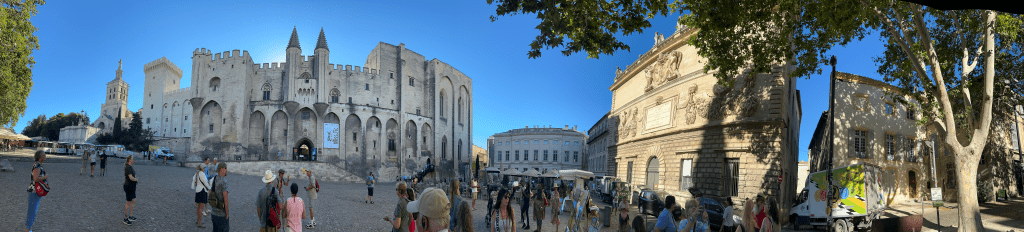
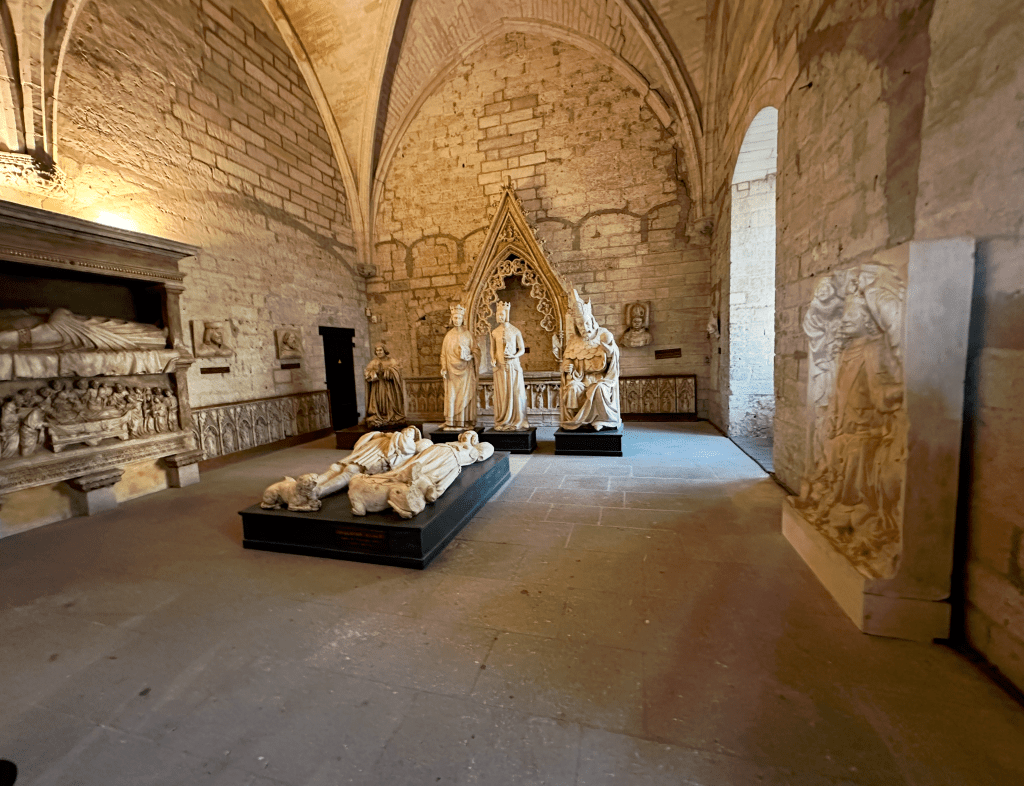
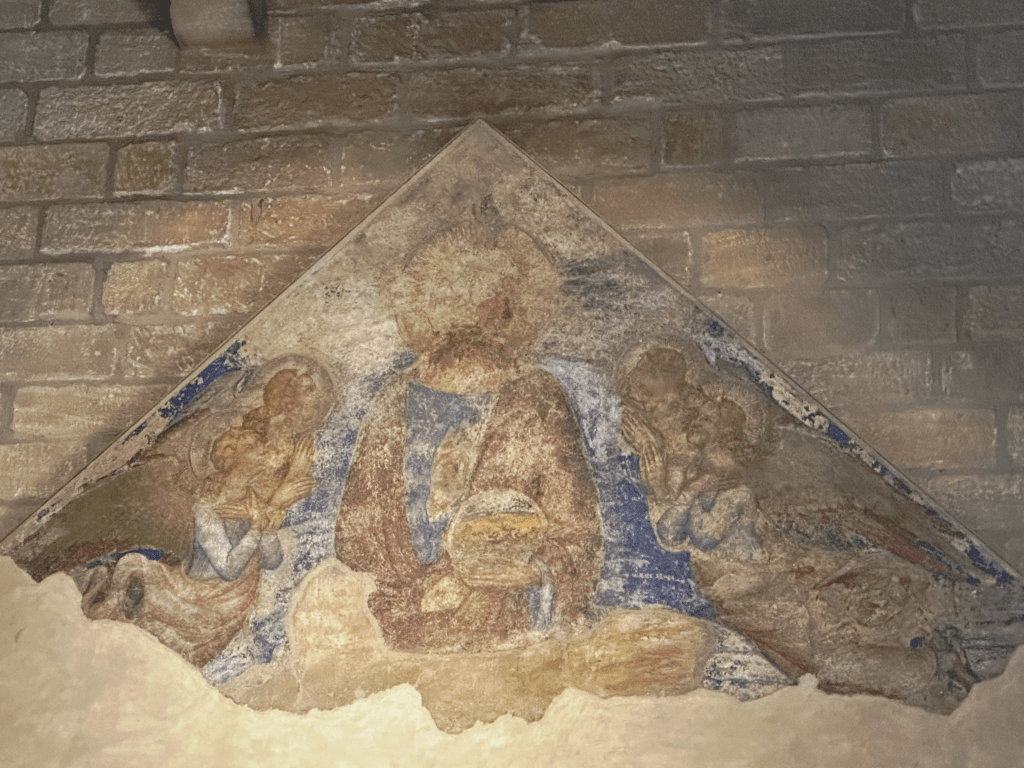
Our first stop was the Palais des Papes, a masterpiece of Gothic architecture, Avignon’s crown jewel, one of Europe’s most significant medieval buildings, and a UNESCO World Heritage site. Once the seat of Western Christianity and serving as the papal residence during the 14th century, the palace stands as a testament to the city’s rich history. As we wandered through its grand halls, chapels, and hidden chambers, we marveled at the intricate frescoes and towering walls that whispered stories, making the past come alive.
Even today, the Palais des Papes stands as a symbol of Avignon’s unique role in European history, combining religious, political, and artistic influences in an awe-inspiring fortress. If you get the chance to visit, be sure to explore the grand halls and climb the towers for stunning panoramic views of Avignon and the Rhône River!
💡 Fun Facts
- The palace once had luxurious tapestries, gold-painted walls, and rich furnishings, but most were lost over time.
- At its height, 500 people worked in the palace, maintaining its grandeur.
- The Papal Treasury stored vast amounts of wealth, making Avignon a major financial hub in medieval Europe.
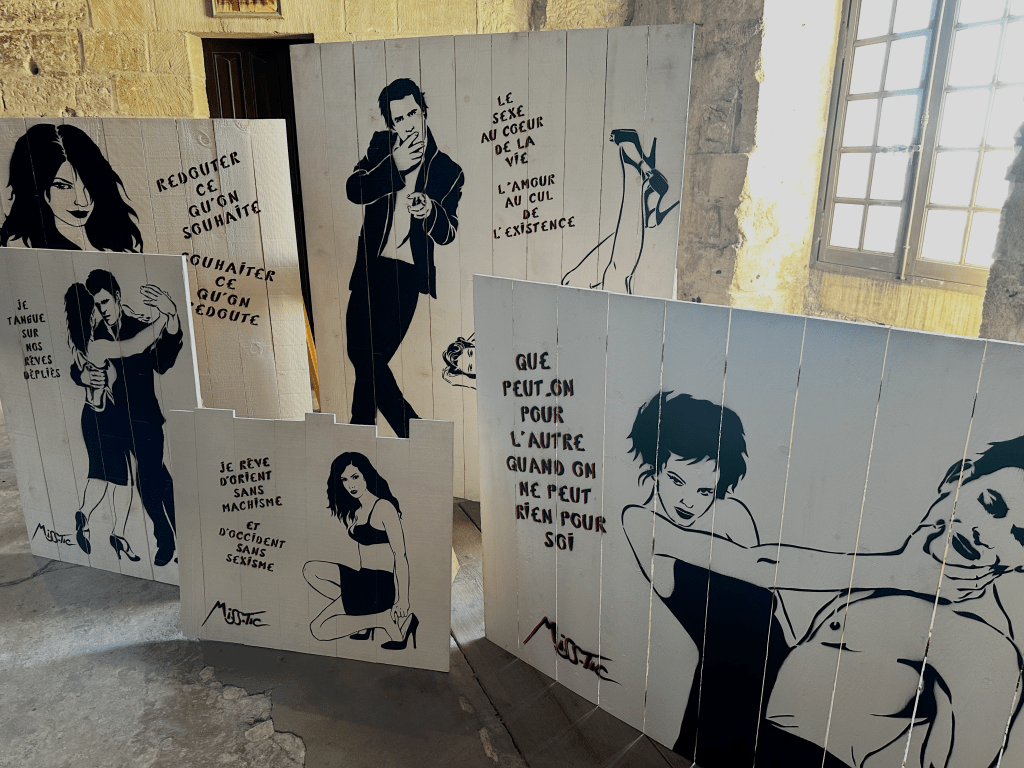
Walking through the grand halls of the Palace of the Popes, with its towering stone walls and echoes of medieval power, was an awe-inspiring experience on its own. But to see the bold, rebellious works of Miss.Tic displayed within this historic stronghold created a striking contradiction—one that felt both provocative and poetic. Her rich, vibrant stencils of fierce, enigmatic women, paired with sharp-witted phrases, stood in stark contrast to the somber weight of the palace’s past, where religious authority once reigned. The juxtaposition of her modern, defiant artistry against the rigid, centuries-old walls made the exhibition even more powerful, as if her spirit had slipped through time to challenge history itself.
💡 Fact about Miss.Tic
Miss.Tic, born Radhia Novat on February 20, 1956, in Montmartre, Paris, was a pioneering French street artist renowned for her evocative stencils and poetic expressions that graced the city’s walls from 1985 until her death in 2022. The following are a few photos that I was blessed to take while on our tour.
Avignon Cathedral
The Cathédrale Notre-Dame des Doms stands proudly beside the Palais des Papes, its Romanesque elegance a striking complement to the grandeur of the papal palace. Crowned by a magnificent golden statue of the Virgin Mary, which gleams under the Provençal sun, the cathedral exudes a sense of serenity and spiritual majesty. Stepping inside, visitors are greeted by intricate frescoes, stunning sculptures, and ornate chapels that speak to centuries of devotion and artistry. The cathedral’s baroque choir, Gothic tombs of Avignon’s popes, and beautifully carved wooden stalls offer a glimpse into the religious and artistic heritage that has shaped this sacred space. Whether admiring the architecture from the outside or exploring its solemn interior, Notre-Dame des Doms remains a timeless symbol of faith and history in the heart of Avignon.
Strolling Through the Picturesque Old Town
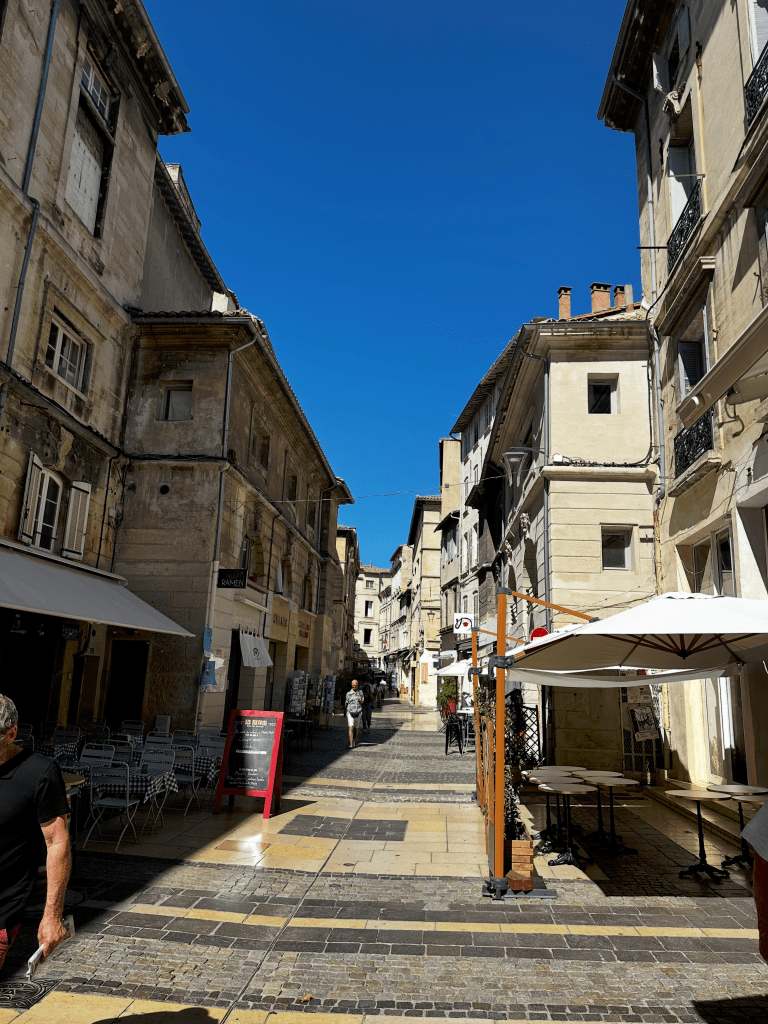
Next, we meandered through the charming streets of Avignon’s Old Town, a delightful labyrinth of narrow lanes, each lined with quaint shops and inviting cafes. The atmosphere was lively yet relaxed, and we couldn’t help but feel a sense of belonging as we mingled with the friendly locals.
The city’s heart, Place de l’Horloge, is a lively square buzzing with cafés and restaurants—a place to grab a seat at a terrace café and soak up the vibrant atmosphere. While there, we stepped in to take a peek and maybe a treat or two at Les Halles Market, a bustling indoor market offering fresh produce, fresh-baked pastries and bread, cheeses, olives, and much more; this is a must-visit haven for lovers of food.
Our visit to Avignon was truly remarkable, a journey through time and culture that left us enriched and inspired. From the historic landmarks to the contemporary art and market, Avignon provided us with an unforgettable journey and captured our hearts in every way possible.
🏛️ Historical and Cultural Highlights
- Palais des Papes (Palace of the Popes): One of Europe’s largest and most important Gothic buildings, this 14th-century palace housed seven successive popes and stands as a symbol of Avignon’s role in Catholic history.
- Pont Saint-Bénézet (Pont d’Avignon): Built in the 12th century, this bridge is shrouded in legend and famously inspired the French children’s song “Sur le Pont d’Avignon.”
- Ramparts and City Walls: Still intact, these medieval fortifications circle the old city and reflect Avignon’s historical role as a papal stronghold.
- Place de l’Horloge: A lively city square lined with cafés and restaurants, perfect for people-watching and enjoying the city’s relaxed pace.
💡 An Interesting Fact
Avignon was once the seat of the Catholic papacy from 1309 to 1377 during what is known as the Avignon Papacy, a period that greatly influenced European politics and church history.
😄 A Fun Fact
The famous French nursery rhyme “Sur le Pont d’Avignon” is actually a bit misleading—the dancing happened beneath the bridge on its piers, not on top! But no one can resist humming it while walking across the remaining arches.
🌟 Why Visit Avignon?
Avignon is a dream destination for lovers of history, architecture, art, and food. It offers a deep dive into medieval France, wrapped in a warm Provençal atmosphere. Whether you’re exploring Gothic masterpieces, sampling local delicacies, or enjoying riverside views, Avignon is both magical and memorable. It’s perfect for a romantic day trip or a longer, immersive cultural stay.
🚆 Practical Tips for Visiting Avignon
Getting There:
- By Train: Avignon is easily accessible via TGV (high-speed train) from Paris (2.5 hours), Marseille (35 minutes), and Lyon (1 hour).
- By Car: It’s a scenic drive from other Provençal towns and great for those touring the region.
- By Air: The nearest major airport is in Marseille, about an hour away.
When to Visit:
- Spring (April–June) and fall (September–October) offer mild weather and fewer crowds—ideal for walking and sightseeing.
- Summer is vibrant with festivals, especially the famous Festival d’Avignon in July, but it can be hot and crowded.
Where to Stay:
Chambre d’Hôtes Les Jardins de Baracane—A cozy B&B with Provençal elegance and garden views
Stay in or near the historic center for walkability and charm. Great options include
La Mirande—A luxury hotel in a restored 18th-century mansion
Hotel Cloitre Saint Louis—A unique stay in a former convent with historical ambiance

Don’t be shy–say hi in the comments